A friend of mine retired three years ago and did the thing the magazines tell you to do. He moved to a "top-ranked retirement city" he'd read about in one of those annual lists. Beautiful place. Sunshine, golf, a brochure-perfect downtown. Eighteen months later he moved again, this time to be forty minutes from his daughter and a hospital that actually had the cardiology group his condition needed. He told me the first move taught him something the list never mentioned: a city can be perfect for the person who wrote the article and wrong for you.
I think about that whenever someone asks me where they should retire. Because here's the thing nobody puts at the top of these "best places to retire" pieces: the rankings are largely subjective, and a lot of them are quietly selling something. A magazine wants engagement. A state tourism board wants you to picture yourself on its beaches. A real estate developer wants the listing. None of those people know your knees, your prescriptions, your pension, or how far you're willing to live from your grandkids. I do not know those things either. But I can tell you which factors actually decide whether a place works, and then you can weigh them for yourself, because the weighting is the whole game.
So let me lay out the honest criteria first. Then I'll give you ten cities I think hold up to real scrutiny — each with the pros AND the catch, because every one of them has a catch.
The Factors That Actually Decide It
There are six things that matter, and most lists only talk about two of them.
Cost of living and housing. Obvious, but people fixate on the sticker price of a house and forget property taxes, insurance, and what it costs to actually live there month to month. A cheap house in an expensive county is not a bargain.
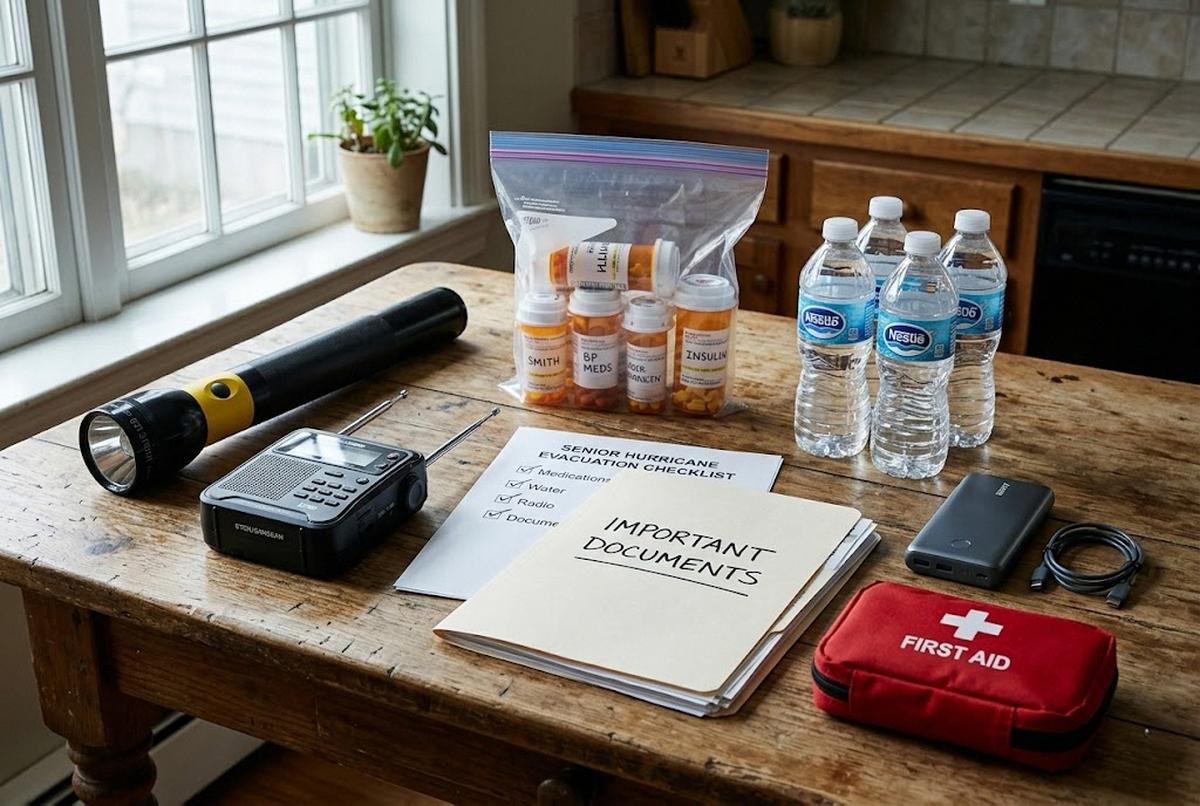
Healthcare access. This is the one people underweight, and it's the one they regret. When you're 55 and healthy, proximity to a good hospital feels abstract. At 75, with a heart condition or a spouse who needs a specialist, it is the most important number on the page. I watched my own family burn weeks trying to get a parent in front of the right specialist — and that was in a city with good hospitals. Move somewhere with a thin medical bench and that frustration becomes a genuine risk. Ask specifically: is there a major teaching or referral hospital within a reasonable drive, and do the specialists you'll actually need take new patients?
State tax treatment of retirement income. States differ wildly on whether they tax Social Security, pensions, and retirement-account withdrawals. But here's the honest part the no-income-tax cheerleaders skip: states with no income tax usually recoup it somewhere — higher property tax, higher sales tax, or both. Texas has no income tax and some of the highest property taxes in the country. So look at the whole tax picture, not the one headline.
Climate, and what it does to your body. Heat is not a lifestyle preference when you're older and managing blood pressure or a heart condition — it's a medical constraint. So is ice on a sidewalk you have to walk on. Pick the climate your body can actually handle, not the one that looks good in photos.
Walkability and transit. You may not always drive. That sentence lands differently at 78 than it does today. A place where you can reach a pharmacy, a doctor, and a grocery store without getting behind the wheel is a place you can age in. Most of the Sun Belt fails this badly.
Proximity to family. The least quantifiable and often the most important. The best-ranked city in the country is worth less than being twenty minutes from someone who'll drive you to chemo.
Now weight those for yourself. If you're healthy and adventurous and your kids are scattered, you can prioritize climate and cost. If your health is the concern, healthcare and walkability climb to the top. There is no universal ranking. There's only your ranking.
Sarasota, Florida
The classic pick, and not without reason. Florida has no state income tax, so Social Security, pensions, and withdrawals all go untaxed at the state level — that's real money. Sarasota also has genuinely strong healthcare: Sarasota Memorial is well-regarded and recently expanded, including a new oncology tower. The Gulf-coast setting and the arts scene are the draw, and the senior services are deep because, frankly, this city is built around retirees.
The catch is cost and climate. Sarasota's cost of living runs well above the national average, with housing the biggest culprit — buying or renting costs noticeably more than the typical U.S. city. And the climate that looks like paradise in February is brutal in August. Summer heat and humidity are real medical constraints, and hurricane season is not a rumor — it's an annual planning event with insurance costs to match. Florida homeowners' insurance has gotten genuinely punishing. Budget for it honestly.
Tucson, Arizona
If you want dry desert warmth without paying Phoenix prices, Tucson is the smarter Arizona play. It runs meaningfully cheaper than Phoenix, with a median home price far below the Sun Belt's pricier metros, and it's anchored by Banner University Medical Center, the academic hospital tied to the University of Arizona — that's a strong medical bench for a city its size. Arizona doesn't tax Social Security and has a low flat income tax of 2.5%.
The catch is summer. Tucson is a touch cooler than Phoenix, but "cooler" in this context still means triple digits for stretches of the year, and that locks you indoors for months. The dry heat is easier on some bodies than humidity, but heat is still heat. And one quirk worth knowing: healthcare costs in Tucson actually run higher than in Phoenix even though almost everything else is cheaper.
San Antonio, Texas
San Antonio is the most defensible Texas pick for retirees, and I say that having written a whole separate guide to the state. No state income tax. A cost of living that runs below the national average. The most affordable housing of any major Texas metro. And the South Texas Medical Center — one of the largest medical complexes in the state, with multiple hospital systems and a deep specialist network. On healthcare access alone it punches above its weight.
The catch is two-fold. First, the heat — South Texas summers are long and punishing, same medical constraint as Florida. Second, and this is the no-income-tax trap I warned about: Texas property taxes are high, running around 2% in the San Antonio area. You don't pay the state on your income, but you pay the county on your house, every year, forever. Run that math before the move, not after.
Asheville, North Carolina
Asheville earns its reputation. Mild mountain climate, a walkable and genuinely interesting downtown, an arts-and-food culture that doesn't feel manufactured, and Mission Hospital as the regional anchor. North Carolina doesn't tax Social Security. For people who want four real seasons without harsh winters, the Blue Ridge setting is hard to beat.
But the catch has grown teeth. Cost of living has risen sharply — Asheville now runs above the national average, with home prices that have climbed well past what "mountain town" implies. Two more honest notes: HCA's takeover of Mission Hospital has drawn ongoing community concern about service and billing, and specialist wait times can run longer than in a bigger metro. And you cannot talk about Asheville in 2026 without Hurricane Helene — the 2024 flooding did historic damage, and recovery is still underway. The region is rebuilding and worth supporting, but go in clear-eyed about what's still being repaired.
Greenville, South Carolina
Greenville is my pick for people who want walkable-and-affordable in the same sentence, which is a rare combination. The downtown is the real attraction — a falls-anchored, genuinely strollable Main Street with a Walk Score in the low 80s and the 22-mile Swamp Rabbit Trail threading through it. Cost of living runs below the national average. Healthcare is solid, anchored by Prisma Health, a Level I trauma center and the dominant system in the region.
The tax picture here is quietly excellent and worth spelling out: South Carolina doesn't tax Social Security, lets residents 65+ deduct $15,000 per person in retirement income, has one of the lowest effective property tax rates in the country (around 0.57%), and adds a homestead exemption for seniors on top. A couple in a modest home can see a property tax bill under a thousand dollars a year. The catch is mild but real — the most walkable, desirable parts of downtown have gotten pricey as everyone else figured out what I just told you.
Knoxville, Tennessee
If low cost is your top priority, Knoxville is one of the strongest values on this list. Tennessee has no state income tax and taxes no retirement income of any kind — not Social Security, not pensions, not withdrawals. Cost of living runs roughly 10 to 15% below the national average, and home prices sit comfortably below the national median. It's anchored by the University of Tennessee Medical Center, an academic teaching hospital, which gives Knoxville hospital access well above what you'd expect for its size.
Two honest catches. First, the no-income-tax money gets partly clawed back at the register: the combined sales tax is about 9.25%, among the highest in the country, and Tennessee taxes groceries. Second, the summers are humid, and public transit is thin — this is a drive-everywhere city, which matters more as you age.
Pittsburgh, Pennsylvania
Pittsburgh is the contrarian pick I'd push hardest. It is one of the few places in America where you get world-class medicine and genuinely affordable housing at the same time. UPMC is one of the top integrated health systems in the country, plus there's Allegheny Health Network as a second major option — for a retiree whose chief worry is healthcare, that combination is hard to find anywhere at this price. The median home price sits around $265,000, roughly a third below the national median. And Pennsylvania doesn't tax Social Security or retirement income.
The catch is the obvious one: winter. Pittsburgh gets cold, gray, and snowy, and the city is famously hilly — which is charming until you're navigating an icy slope on foot or worrying about a fall. Older housing stock also means higher heating bills. If your body handles cold and you weight healthcare highly, though, the value here is genuinely tough to beat.
Ann Arbor, Michigan
College towns are quietly becoming retirement destinations, and Ann Arbor is the prime example: culture, lectures, walkable neighborhoods, and — the real prize — the University of Michigan's Michigan Medicine, one of the top academic medical centers in the country, right in town. If you want intellectual life and top-tier healthcare in a mid-size, walkable setting, few places match it.
The catches are cost and cold. Ann Arbor is the priciest Midwest option here — housing runs well above the national average and healthcare costs are notably high. And the winters are genuine Michigan winters, with January overnight lows below 20°F. It's also a college town, which means the rhythm of the place bends around the academic calendar and football Saturdays — some retirees love that energy, others find it exhausting. Know which one you are.
Madison, Wisconsin
Madison is the second college-town option, and it's a strong one: lakes, an active outdoor culture, a walkable isthmus downtown, UW Health as a top-tier academic system, and consistent high marks for overall quality of life. Wisconsin is notably tax-friendly to retirees — it doesn't tax Social Security benefits. Cost of living runs only modestly above the national average, more reasonable than Ann Arbor.
The catch is the winter, full stop. Wisconsin winters are long, cold, and snowy, and that's a serious consideration for anyone with mobility or balance concerns — five months of ice is not a footnote. The flip side is that summers and falls in Madison are genuinely beautiful. If you can handle the cold, it's one of the most livable cities in the country.
Minneapolis, Minnesota
I'm including one true transit city, because if your plan involves not driving someday, you need a place actually built for that. Minneapolis is it. Dense walkable neighborhoods, a real light-rail and bus network, miles of trails, and — the clever winter trick — a nine-mile indoor Skyway system connecting eighty downtown blocks, so you can run errands in February without stepping outside. Healthcare is strong, with major systems throughout the metro.
Two honest catches. First, the cold makes Pittsburgh look temperate — Minnesota winters are the real thing. The Skyway helps downtown; it doesn't help your neighborhood sidewalk. Second, the tax picture: Minnesota is one of the minority of states that still taxes Social Security, though a recent law fully exempts it for single retirees under about $84,000 of income and couples under about $108,000. Above those thresholds it phases back in, and the top income tax rate is among the highest in the country. For modest-income retirees it's fine; for higher-income retirees it's a real cost. Run your numbers.
How To Actually Decide
Here's what I'd do, and it isn't glamorous. Take the six factors at the top of this piece and rank them for your own life, honestly. Then take your top two or three contenders and visit each one in the worst season, not the best — Sarasota in August, Pittsburgh in February. The brochure shows you the good month. Your body has to live through the bad one.
Then make the calls nobody puts in a magazine. Call the specialist you'll actually need and ask if they're taking new patients. Get a real property-tax and insurance quote on an actual house, not a state average. Spend a day getting around without your car and see how that feels. Sit down with the full tax picture — income, property, and sales together — instead of the one number a state likes to advertise.
I won't pretend I've got the definitive answer here — there isn't one, and anyone who tells you there is, is selling something. What I can tell you is that the right place is the one where you can get good care, afford the life, handle the weather, and reach the people you love. Get those four right and the ranking doesn't matter. If you're thinking about travel before you commit to a move, our honest, region-first guides to Texas and Florida are a good way to test-drive a region before you bet your retirement on it.