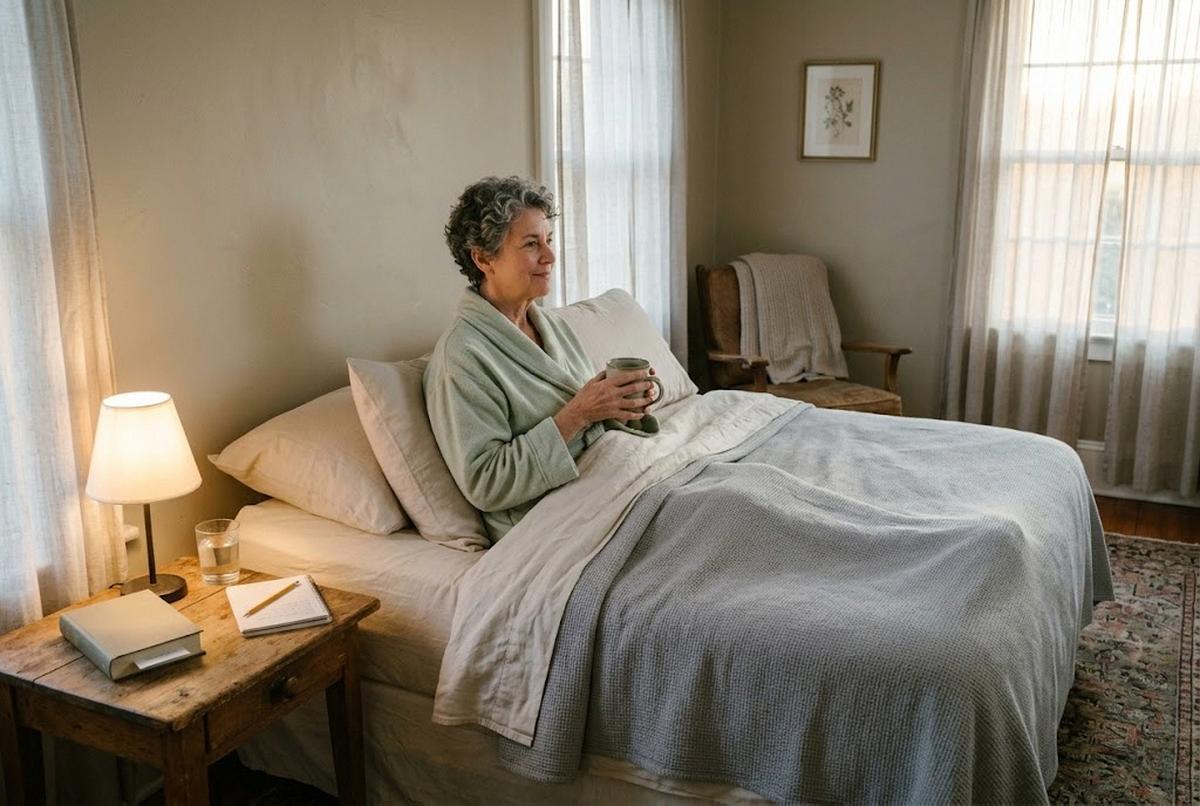
The summer Harold was sick, I learned a particular sound. The compressor on the oxygen concentrator clicked every forty seconds. I know this because I lay beside him in the dark and counted, the way other people count sheep, until the sky outside our bedroom window in West Asheville turned from black to the gray that comes before the gray that comes before sunrise.
I did not sleep well for a year and a half. After he died in 2009, I did not sleep well for another two years. I am a wellness counselor. I had read every book. None of it helped me until I stopped trying to fix the sleep and started learning what was actually happening in a sixty-something body in grief.
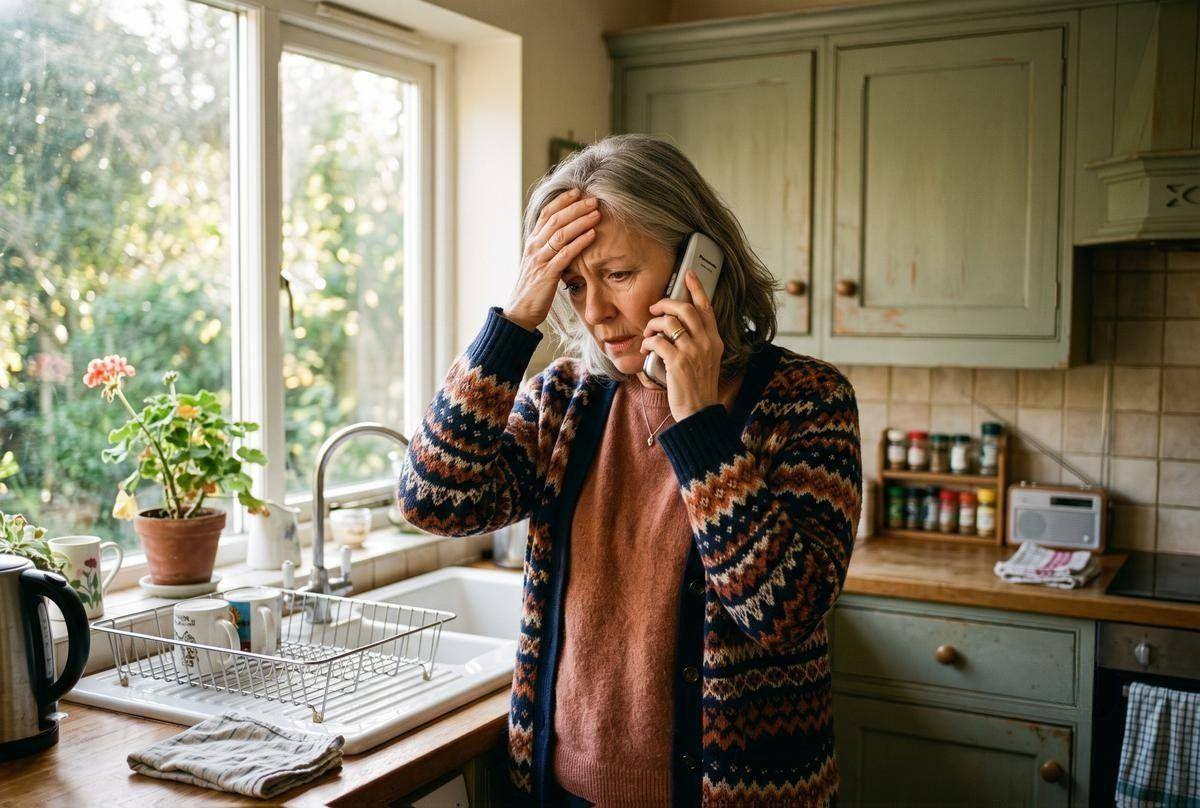
I am writing this because the woman who came to my office last Thursday — let's call her Marlene, seventy-three, widowed for four years, sharp as a tack — said something I have heard a thousand times. "I'm taking a Tylenol PM every night, and my doctor said that's fine." It is not fine. And the rest of what we tell older adults about sleep is mostly not fine either.
What's actually happening to your sleep at 70
I want to start with a piece of news that landed for me like permission. The sleep you had at thirty-five is gone, and it is not coming back, and that is not a problem to solve.
Here is what the sleep research actually shows. As we move past sixty, the architecture of sleep changes in measurable ways. Deep slow-wave sleep — the heaviest, most restorative stage — declines significantly. We get less of it, full stop. REM sleep stays roughly stable. We wake more often during the night, sometimes four or five times, often briefly enough that we don't fully remember in the morning. And our internal clock advances — we get sleepy earlier in the evening and wake earlier in the morning, sometimes by an hour or two compared to our forties.
None of this is failure. It is biology. The American Academy of Sleep Medicine has been clear about this for years: a healthy seventy-five-year-old who sleeps six and a half hours with a couple of brief wake-ups and feels reasonably alert in the afternoon is not sick. She is sleeping like a healthy seventy-five-year-old.
The pathology line — the line where insomnia becomes a real medical concern — is not how many hours the alarm clock counts. It is daytime function. Are you fighting to stay awake driving to the grocery store at two in the afternoon? Are you irritable in a way that doesn't lift? Have you stopped doing the things that used to bring you joy because you're too tired? That is the conversation worth having with a clinician. The number on the clock, by itself, isn't.
The pill on the nightstand is doing something you don't want
I want to talk about Marlene's Tylenol PM, and Ambien, and Ativan, and all the cousins. I want to talk about them the way I would talk to my own brother, who is seventy-two and once asked me about Lunesta.
The American Geriatrics Society publishes something called the Beers Criteria — a list of medications that pose particular risks to adults over sixty-five. It is not a fringe document. Geriatricians treat it like scripture. On that list, in plain language, are the drugs most older adults are quietly taking to sleep.
Benzodiazepines — Ativan, Xanax, Restoril, Valium — increase the risk of falls, hip fractures, confusion, and cognitive impairment in older adults. The Z-drugs marketed as safer alternatives — Ambien, Lunesta, Sonata — carry similar risks at this age. And the diphenhydramine in Tylenol PM, Benadryl, and most over-the-counter sleep aids is a strong anticholinergic, which means it interferes with the same chemical pathways involved in memory and balance. Long-term anticholinergic use in older adults is associated with higher rates of cognitive decline.
I am not telling you to throw your prescription in the trash tonight. Coming off these medications without a plan can be worse than staying on them. I am telling you that if you are sixty-five or older and you are taking any of these to sleep, you deserve a conversation with your doctor that begins with, "Is this still the right thing for me, and what would coming off it look like?"
The hardest part of that conversation, for most of the people I sit with, is the fear underneath it: if I don't take this, I won't sleep at all. I have sat with that fear in my own bed. I want to tell you what worked instead.
CBT-I, which almost no one talks about
Cognitive Behavioral Therapy for Insomnia — CBT-I — is the treatment the American Academy of Sleep Medicine recommends as the first-line approach for chronic insomnia. Not as one option among several. As the first thing to try, ahead of any medication. The response rate in studies runs around seventy to eighty percent. It works as well as a sleeping pill while you're doing it, and unlike the pill, the benefits hold after you stop.
I will tell you what it actually involves, because the name sounds clinical and it isn't.
CBT-I has four pieces. The first is stimulus control — retraining your brain to associate the bed with sleep, not with lying awake worrying. If you can't fall asleep in twenty minutes, you get up, sit in another room with a low light and a boring book, and come back when you're drowsy. No phone. No clock-watching.
The second is sleep restriction, which is counterintuitive and the part that scares people. You temporarily compress the time you spend in bed to roughly match the time you actually sleep. If you're in bed nine hours and sleeping six, you might cut your time in bed to six and a half hours. You will feel more tired for a week or two. Then your sleep consolidates — you start sleeping straight through what time you do allow yourself — and the window slowly expands.
The third is cognitive restructuring — examining and dismantling the catastrophic thoughts that build up around bad sleep. If I don't sleep tonight, tomorrow will be ruined. I'll get sick. I'll never sleep normally again. These thoughts produce arousal that prevents sleep, which produces more thoughts, which is the loop. Naming them out loud, in daylight, breaks the loop.
The fourth is sleep hygiene — the boring but real basics. Cool dark room. No screens for an hour before bed. Consistent wake time. No caffeine after noon. Most of what you've heard.
CBT-I is now widely available through telehealth and through apps that the V.A. has helped validate (the V.A. uses CBT-I as the standard of care for veterans with insomnia, which says something). You don't need to live near a sleep clinic to access it. If your primary care doctor has not mentioned it, you can ask.
When it isn't insomnia at all
I've sat with families who spent years treating insomnia that turned out to be something else entirely, and the cost of the missed diagnosis was significant. A few patterns are worth knowing.
If your spouse tells you that you snore, gasp, or stop breathing during sleep, and you are sleepy during the day no matter how long you spent in bed, that is sleep apnea until proven otherwise. It is treatable. Untreated, it raises the risk of stroke, heart failure, and dementia. A sleep study — which can now often be done at home — answers the question.
If your legs feel restless or crawly in the evening and the feeling is relieved by moving them, that is restless legs syndrome. It has effective treatments. It is also frequently linked to low iron, which a simple blood test will catch.
And there is a less-known pattern I want to flag because I have watched two families miss it. If you find yourself acting out your dreams — yelling, kicking, sometimes hitting your bed partner during sleep, no memory of it in the morning — that is REM sleep behavior disorder. It is benign in itself, but it is one of the strongest known early markers of Parkinson's disease and related conditions, sometimes appearing years before any other symptom. It is worth telling your doctor about, not to alarm yourself, but to be seen and followed.
These are conversations to have with a board-certified sleep specialist or a neurologist, not a general primary care visit. You can ask for the referral. You are allowed to ask.
What I do now, all these years after Harold
I sleep differently than I did at fifty, and most nights, I sleep well. I wake once, usually around four, and lie still for ten minutes, and most of the time I drift back. I am up by 5:30 anyway because that is when the trail behind my house starts to lighten and my body wants to be on it.
I want to tell you the small things, because the small things are what added up.
I stopped looking at the clock when I woke in the night. I covered it with a folded washcloth. The act of calculating "I have four hours and twenty-two minutes left" is its own form of arousal, and I was doing it eighteen times a night.
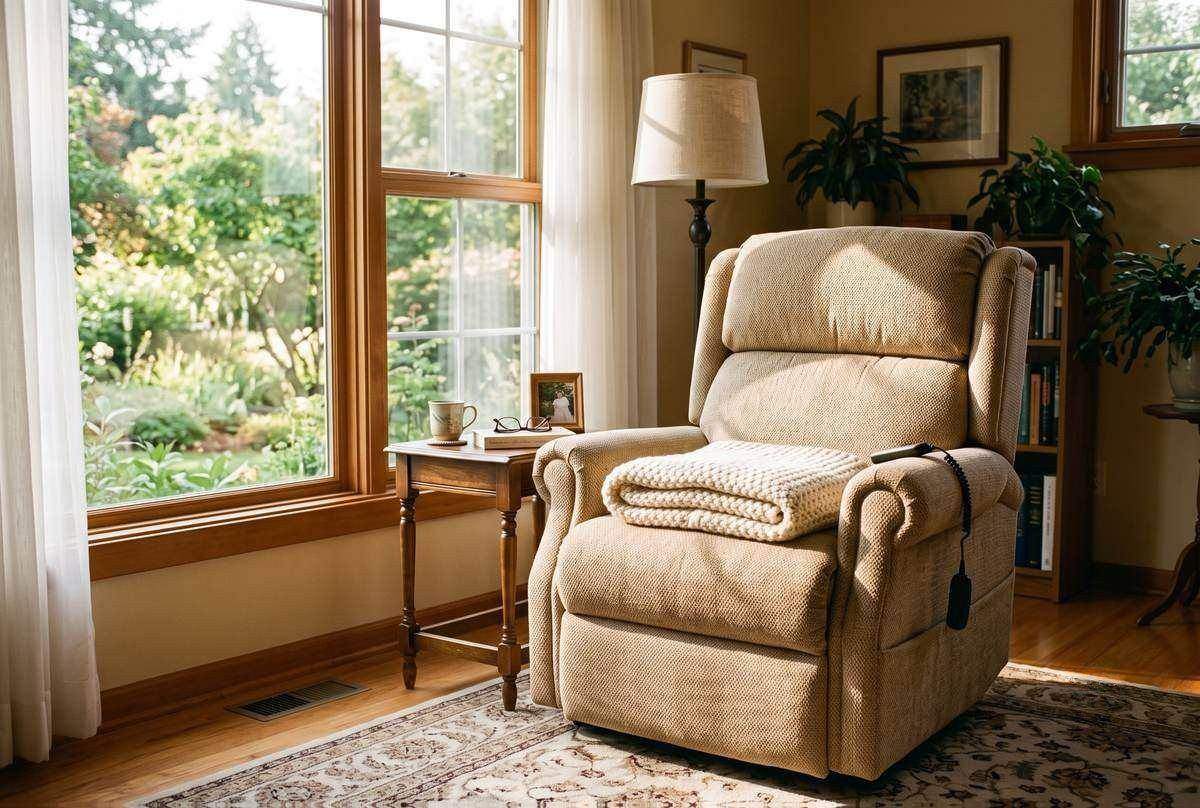
I gave up the idea that bad sleep was an emergency. On the nights it doesn't come — and there are still nights — I read, slowly, in the chair by the window. I drink something warm. I do not catastrophize. The next day is a little harder and then it passes.
I made my bedroom quieter and my evening softer. I keep a fan running for white noise. I put my phone in the kitchen at nine. I read a real book in dim lamplight for thirty minutes. None of this is novel. All of it works because I do it most nights, not because I do it perfectly.
I take grief seriously as a sleep disruptor. The first year after Harold, my insomnia wasn't a sleep problem. It was a grief problem wearing a sleep costume. The body knows. If you are in a season of fresh loss, please be patient with the sleep, and please be honest with someone — a counselor, a friend, a support group for caregivers and the recently widowed — about what is actually keeping you awake.
And I send people, when it is right, to two places I trust here on this site: a deeper walk through the components of CBT-I and how to access it, and the companion piece I wrote on grief after losing a spouse — what nobody tells you, because for many of us at this age the sleep problem and the grief problem are wearing each other's clothes. Read whichever calls to you tonight.
What I tell Marlene
I told Marlene last Thursday what I am telling you. The Tylenol PM is not nothing — it is doing something to her brain that her brain at seventy-three does not need done to it. There is a real treatment, available through her insurance, that almost no one offered her. Six and a half hours with one wake-up at her age is not a failure. And the sleep she had at forty-two is gone, and grieving that quietly might be more useful than fighting it.
She cried a little. I did too. We are not strangers — Marlene was at Harold's funeral, sat in the third row, and brought a casserole afterward that I ate cold standing at the kitchen counter at two in the morning because I couldn't sleep.
I don't know if she will follow through on the referral. I think she might. But what I told her, and what I want to tell you, is that the goal at our age is not to sleep like a thirty-five-year-old. It is to sleep like a healthy seventy-three-year-old, and to stop carrying shame about the difference. Rest is still possible. Some of it just looks different than it used to. We are not failing. We are simply older, and the older body asks for a softer bargain than we were taught to make.
Sleep, like grief, has its own schedule. We cannot bully it. We can only show up, night after night, with a little less fear and a little more honesty about what is actually keeping us awake.
That is the work. It is enough.