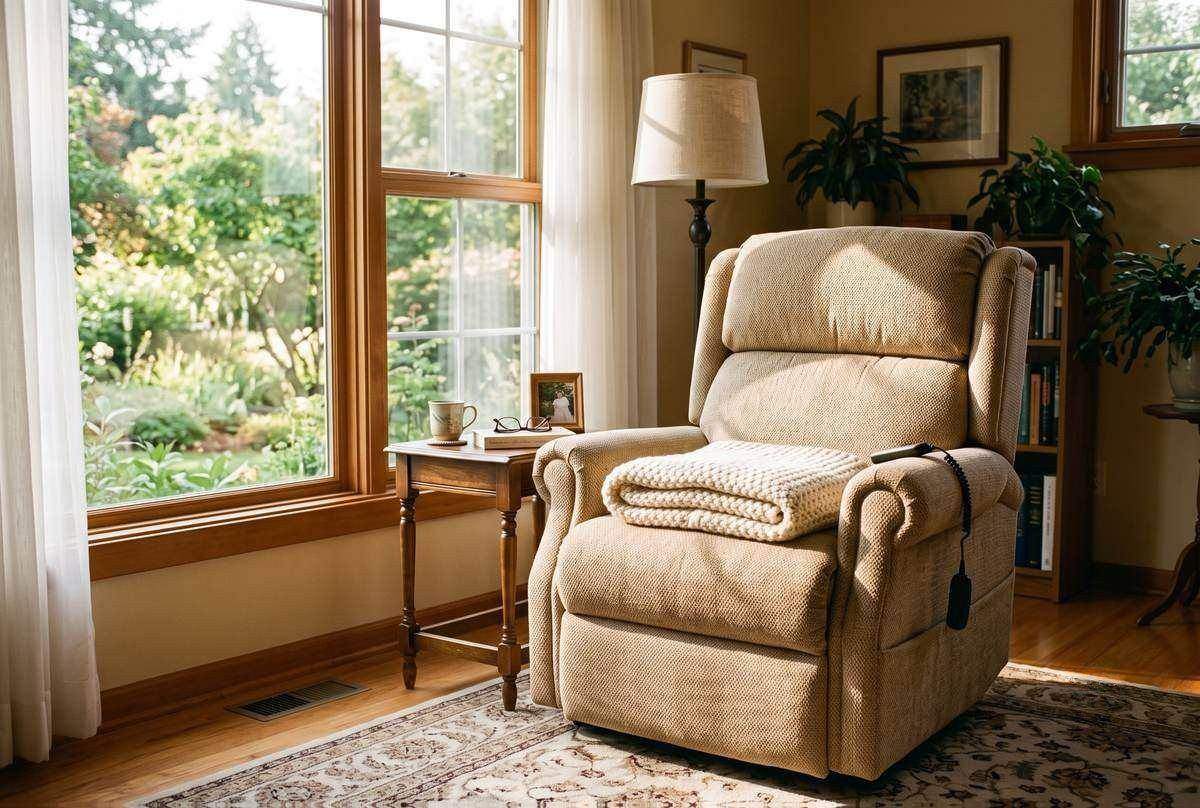
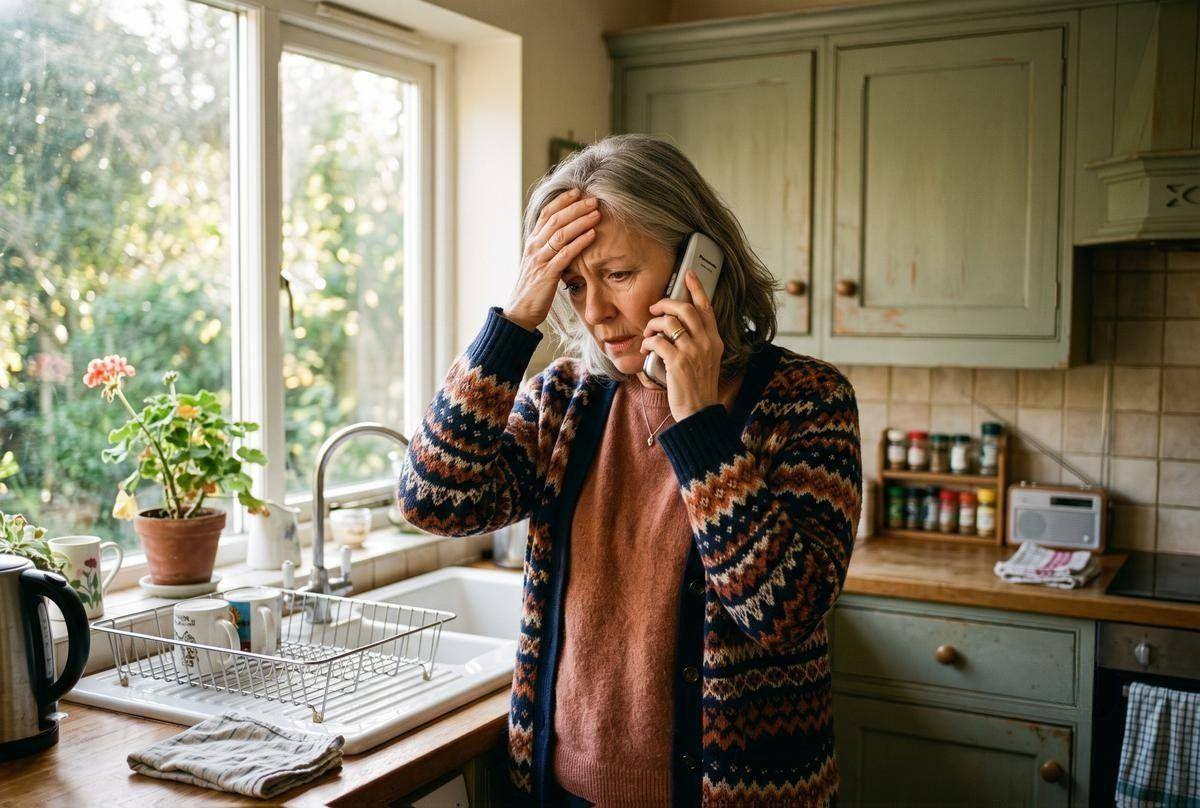
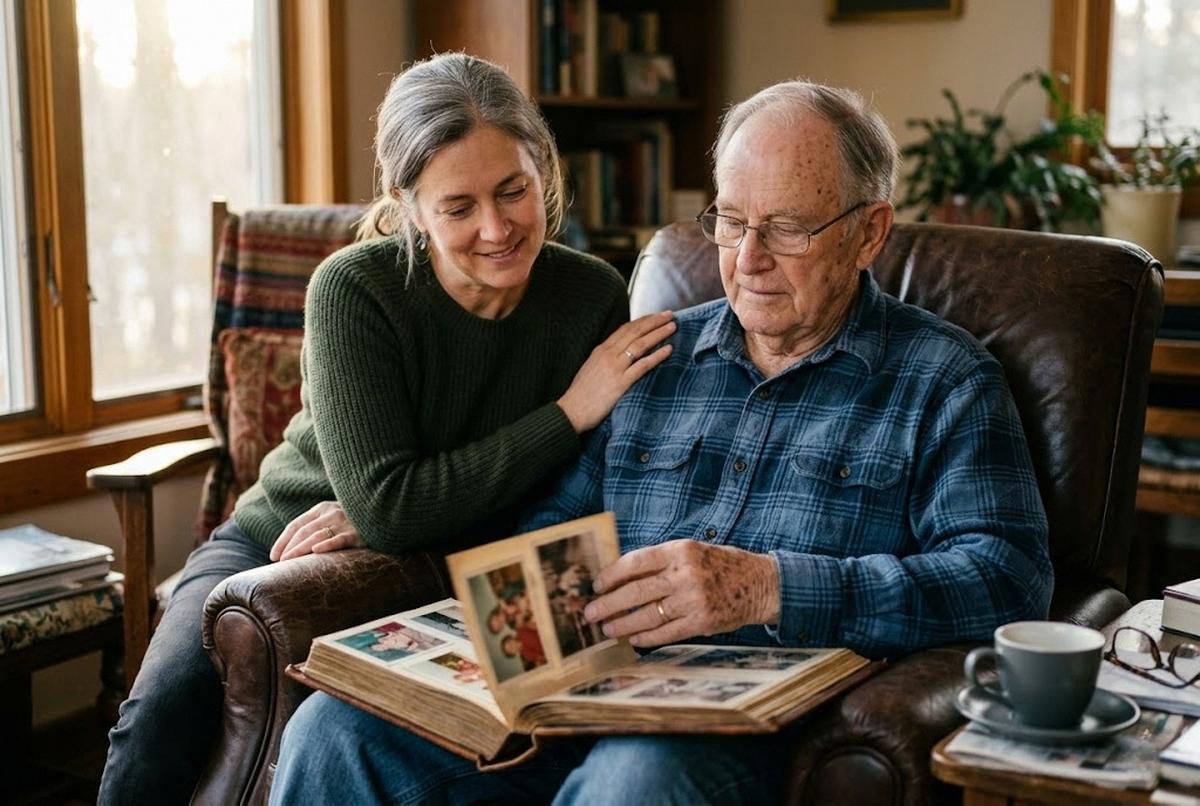
A woman I sat with last winter told me her husband had been to the cardiologist three times in two months. Chest pressure. Shortness of breath. The cardiologist ran the workup twice, found nothing, and finally asked, almost as an afterthought, whether he had been sad. The man said no. His wife said yes. He had been sitting in his recliner with the television off, sometimes for hours. He had stopped reading the paper. He had not picked up his guitar since their son moved to Phoenix in October.
The cardiologist handed him a PHQ-9, the standard depression questionnaire, and asked him to fill it out before he left. He scored a 17. Moderate-to-severe depression. The chest pressure was not his heart. It was his grief and his fear, dressed up as a cardiac complaint, because that was the only door he knew how to walk through.
This happens more than most families realize. Late-life depression and anxiety are common, treatable, and routinely missed. Roughly five to ten percent of older adults living in the community have clinical depression in a given year; the rate climbs above thirty percent in long-term care. Anxiety disorders affect ten to fifteen percent of older adults, often chronically. About half of patients with either condition have both. Yet primary care visits frequently end without a single screening question asked, and roughly half of geriatric depression goes untreated.
This piece is about the medical side: recognizing the condition, asking for the right screen, and what the evidence supports for treatment. For the non-pharmacological practices that protect mental health day to day, see Mental Well-Being in Later Life: What Actually Helps.
Why It Gets Missed
Depression in older adults rarely looks the way it does in a thirty-year-old. Classic sadness and tearfulness are often replaced by irritability, somatic complaints, and what families describe as "not himself." The patient comes in for back pain, dizziness, or memory trouble. He says he is fine. The visit moves on.
Four patterns account for most of the missed diagnoses I have seen across forty years of community wellness work.
The first is minimization. A daughter tells the doctor her mother seems blue, and the doctor nods and says it is understandable at her age. Sadness becomes the explanation rather than the symptom.
The second is confusion with dementia. Depression can produce real cognitive impairment: slower thinking, word-finding trouble, complaints of memory loss. The older clinical term for this was pseudodementia. The phenomenon is real, the label has fallen out of favor, and the consequence is that older adults sometimes get worked up for Alzheimer's when what they actually have is a treatable mood disorder. A Mini-Cog screen alongside a PHQ-9 helps separate the two.
The third is confusion with grief. Bereavement after a spouse's death is not depression. Grief comes in waves, allows moments of relief, and slowly reshapes itself. Major depression sits heavier and longer. The DSM-5-TR added Prolonged Grief Disorder in March 2022 for grief that significantly impairs function for twelve months or more. It is a useful category, but most early grief does not belong in it. Suicidal thinking, persistent functional decline, weight loss, and hopelessness that does not lift after two weeks are the markers that grief has crossed into something that needs treatment.
The fourth is the medical mimic. Thyroid disease, B12 deficiency, untreated sleep apnea, low-dose steroids, beta-blockers, opioids, and certain blood pressure medicines can all produce depressive symptoms. A reasonable workup before a psychiatric label is set includes TSH, B12, basic metabolic panel, a medication review, and questions about snoring and daytime sleepiness.
The Numbers Worth Carrying
Three statistics deserve more attention than they receive.
Men seventy-five and older have the highest suicide rate of any demographic group in the United States. Higher than teenagers. Higher than middle-aged men in economic distress. Higher than any other age band. The most common pattern: a man living alone, recently widowed or recently diagnosed with a serious medical illness, who has access to a firearm. Most have seen a primary care doctor within the previous month. Almost none were asked about suicide. This point bears repeating because it shapes everything else about how we screen older men.
Depression doubles the risk of cardiovascular death and slows recovery from stroke, heart attack, and hip fracture. Treating it is not cosmetic. It is medicine that improves survival.
And anxiety in older adults tends to be more chronic than late-onset depression. Many of the people I work with at Seasons of Grace have carried generalized anxiety for decades, often undiagnosed. Retirement, widowhood, or a medical scare brings it into sharp focus, but the pattern is older than the precipitating event.
What a Good Screen Looks Like
The US Preventive Services Task Force, in its 2023 guidance, recommends depression screening for all adults, including older adults. Three instruments do most of the work in primary care, and a patient or a family member is well within rights to ask which one is being used.
The PHQ-9 is a nine-item self-report. Scores run from 0 to 27. Ten or higher suggests moderate depression. The last question asks directly about thoughts of self-harm; a positive answer there changes the visit immediately. The PHQ-9 takes about three minutes.
The GAD-7 is the equivalent for anxiety. Seven items, scores 0 to 21, ten or higher meaning moderate. The Task Force gives anxiety screening a B grade for adults under sixty-five and an "insufficient evidence" rating for sixty-five and over, not because anxiety matters less, but because the screening evidence base in older adults is thinner. Good clinicians screen anyway when the history suggests it.
The Geriatric Depression Scale (GDS) was designed specifically for older adults. The fifteen-item version is the one most clinics use. Its strength is that it sidesteps somatic questions about sleep and appetite that overlap with normal aging and chronic illness, which makes it less prone to false positives in medically complex patients. If a primary care office is screening older adults with the PHQ-9 alone and the patient has many medical conditions, asking for the GDS is reasonable.
A brief cognitive screen, like the Mini-Cog (under three minutes), should accompany mood screening when memory complaints are part of the picture. The point is to separate cognitive impairment driven by depression from impairment driven by neurodegenerative disease, because the treatments differ entirely.
Medicines That Work, and Medicines To Avoid
For most older adults with major depression, an SSRI is the first-line medicine. Sertraline, escitalopram, and citalopram have the cleanest profiles in this age group. The FDA issued a citalopram warning years ago about QT-interval prolongation at doses above 20 mg in adults over sixty, which has become a useful prescribing guardrail. Paroxetine, an older SSRI with heavy anticholinergic load, is on the Beers Criteria list of medicines to avoid in older adults and is a poor choice when alternatives exist.
SNRIs like duloxetine and venlafaxine are reasonable second-line options, particularly when depression coexists with chronic pain, because they offer some analgesic effect. Mirtazapine is useful in the patient who has lost weight and cannot sleep; appetite stimulation and sedation are part of its profile, which is sometimes exactly what is needed. Bupropion is activating, helpful for low-energy depression, and avoided in patients with seizure disorders or eating disorders.
For anxiety, the same SSRI and SNRI menu applies. Buspirone is a non-sedating anxiolytic that has been around for decades and is underused; it does not cause dependence and does not increase fall risk. Hydroxyzine, an antihistamine with anxiolytic and sedating properties, can help with sleep-associated anxiety on a short-term basis.
The medicines to avoid in older adults are worth naming. Benzodiazepines (lorazepam, alprazolam, clonazepam, diazepam) are on the Beers Criteria for good reason. They raise fall risk, cause cognitive impairment that can look like dementia, produce dependence quickly, and are difficult to taper. They have a role as a short bridge, perhaps one to two weeks, while an SSRI is taking effect. They do not have a role as long-term anxiety management. If an older relative is on a benzodiazepine that has quietly continued for years, a careful taper coordinated with the prescriber is one of the most useful conversations a family can initiate. Tricyclic antidepressants, with their anticholinergic burden, and MAO inhibitors, with their food and drug interactions, are also generally avoided.
St. John's Wort and certain other supplements interact with SSRIs and can cause serotonin syndrome. Anyone on an antidepressant should review supplements with a pharmacist; the piece on supplements seniors should approach carefully covers the most common interactions.
Therapy, ECT, and Newer Options
Medicine is half the picture. Talk therapy is the other half, and in mild-to-moderate depression and anxiety it can do the work alone.
Cognitive behavioral therapy adapted for older adults (sometimes called CBT-LL, late-life CBT) has the strongest evidence base. Interpersonal therapy, focused on roles and relationships, works well after major life transitions. Problem-Solving Therapy is a structured, shorter-form approach with good results in primary care settings. Telehealth changed access for older adults more than for any other group; a therapist three counties away is now a routine appointment, and Medicare reimburses video sessions on par with in-person.
Finding a therapist is harder than it should be. The Psychology Today directory remains the most useful starting point; filters for Medicare, geriatric experience, and telehealth narrow the list quickly. Local Area Agencies on Aging maintain referral lists. Federally Qualified Health Centers offer sliding-scale fees. The national shortage of geriatric psychiatrists, roughly seventeen hundred for the entire country, means most older adults will receive mental health care from a primary care doctor and a generalist therapist, not a specialist. That is workable. It is not ideal, but it is workable.
For severe depression that has not responded to medicines, electroconvulsive therapy remains the most effective treatment available. ECT carries a stigma it does not deserve. In carefully selected older patients, particularly those with psychotic features or catatonia, it is well-tolerated and often life-saving. Transcranial magnetic stimulation, FDA-approved in 2008 and with expanded indications since, is a gentler option for moderate-to-severe depression that has not responded to two medication trials; Medicare covers it with documentation. Esketamine nasal spray (Spravato), approved in 2019 for treatment-resistant depression, has very limited geriatric data and sits at the end of the algorithm.
Exercise belongs here too, not as a replacement for treatment but as an adjunct with measurable effect. Two to three sessions a week of progressive resistance training produce antidepressant effects on par with some medicines in mild depression. It is not a substitute for an SSRI in moderate-to-severe illness. It is a real adjunct.
What Families and Friends Can Watch For
Some signs warrant a same-day call to a doctor or to 988. Others warrant a scheduled appointment within a week. It helps to know which is which.
Call 988 or go to an emergency room today if a person is voicing any suicidal thoughts, giving away possessions without a medical reason, putting affairs in order in a way that feels final, talking about being a burden, or has access to firearms and seems hopeless. The 988 Suicide and Crisis Lifeline, active since July 2022, connects within minutes; Veterans can press 1 to reach a VA-trained counselor. The Crisis Text Line takes HOME to 741741.
Call the primary care office this week if the person has stopped eating regularly, has lost noticeable weight, is sleeping fewer than four hours a night for more than a week, has stopped bathing or attending to basic hygiene, is withdrawing from everyone, is newly confused, or is reporting hallucinations. These cross the line from low mood into something that needs medical attention soon, not next month.
Make a scheduled appointment if the person has been persistently sad, anxious, or irritable for more than two weeks, has lost interest in activities they used to enjoy, is complaining of memory trouble out of proportion to the rest of the picture, or has had a recent loss (a spouse, a sibling, a diagnosis) and seems not to be moving through it.
A practical note: most older adults will accept mental health care more readily when it comes through their primary care doctor than through a separate psychiatric referral. Asking the family doctor to screen and to start treatment, with a referral to therapy if appropriate, removes a step that often defeats good intentions.
A Word About Grief
Grief is not depression, and treating ordinary bereavement as illness is its own kind of harm. The work of palliative care and hospice services includes bereavement support for exactly this reason: to walk with people through normal grief without pathologizing it.
But grief and clinical depression can coexist, and the presence of one does not exclude the other. The questions I ask, after twenty-five years of grief work, are these. Is the person eating? Is the person sleeping at least a few hours? Is there any moment in a day, even briefly, when the weight lifts? Is the person still able to feel love coming toward them, even if they cannot return it? When the answer to all four is no, and has been no for two weeks or more, grief has crossed into territory where a doctor needs to be part of the conversation.
Grief and gratitude can share the same breath. Grief and depression can share the same body. The honest work is to name what is happening, sit with it long enough to see it clearly, and ask for help when help is what the situation calls for.
Closing
Late-life depression and anxiety are not failures of character, not natural consequences of getting older, and not conditions that have to be endured. They are illnesses with screening tools, evidence-based treatments, and a long list of people who have come through them and gone on to do meaningful work in the years they had left.
The husband I described at the beginning of this piece started sertraline, met with a therapist over telehealth twice a month, and picked up his guitar again about four months in. His wife told me at Seasons of Grace last spring that he was teaching their granddaughter chords over FaceTime. The chest pressure has not come back.
This is what treatment can do. It does not erase the losses. It returns the person to a life in which the losses can be carried.
If you are reading this and recognizing yourself, or someone you love, the next step is a phone call. To the primary care office. To a therapist. To 988 if today is the day that matters. Help exists. It is not always easy to find. It is worth finding.