The first time I understood how quietly dehydration can take a person, I was sitting in a hospital room in Atlanta in the late 1980s. The patient was a woman in her seventies admitted for what the chart called acute confusion. Her family had been told, gently, that her dementia must have progressed. She did not recognize her daughter. She did not know the year. By the second day on IV fluids she was asking for the newspaper. She went home that week. Her dementia had not progressed at all. She had been mildly dehydrated for weeks — and at her age, that was enough.
I have watched some version of that scene a dozen times since. Hydration sounds like the most ordinary topic in medicine. Drink water. Eight glasses. Don't forget. But after sixty-five the biology shifts in ways that most of the popular advice does not account for, and the consequences are not small. Dehydration is among the top ten causes of preventable Medicare hospitalizations in AHRQ data. It is the leading community-acquired cause of acute kidney injury in older adults. And the people most at risk are often the ones who insist they are fine.
The Body's Margin Gets Thinner After Sixty-Five
Total body water drops with age. A healthy young adult is roughly sixty percent water. By the seventies that figure falls to about fifty percent in men and forty-five percent in women, mostly because lean muscle gives way to fat. Fat carries less water than muscle, so the reservoir shrinks. The same fluid loss that would barely register in a thirty-year-old can tip an eighty-year-old into trouble.
The second change is more dangerous because it is invisible. The hypothalamic osmoreceptors that register the saltiness of the blood and trigger thirst become less sensitive. Phillips and colleagues showed this in a famous 1984 New England Journal of Medicine study comparing older and younger men deprived of water for twenty-four hours: the older men were measurably more dehydrated by every blood test, and reported feeling less thirsty. Subsequent research has confirmed the pattern. An older adult can be two to three percent dehydrated, enough to impair cognition and balance, before the body produces a clear thirst signal.
The kidneys also lose their concentrating power. A younger kidney can squeeze urine down to a small, dark volume to conserve water under stress. An aging kidney cannot do this as well. So when fluid intake drops or losses rise, the older body keeps spilling water it cannot spare. Add a long list of common medications that pull water out (loop and thiazide diuretics, lithium, some SSRIs, laxatives, and the anticholinergics that hide inside many over-the-counter sleep aids and bladder pills, including diphenhydramine and oxybutynin), and you have a person whose body is leaking water faster than her brain can ask her to drink.
The Silent Driver: Restricting on Purpose
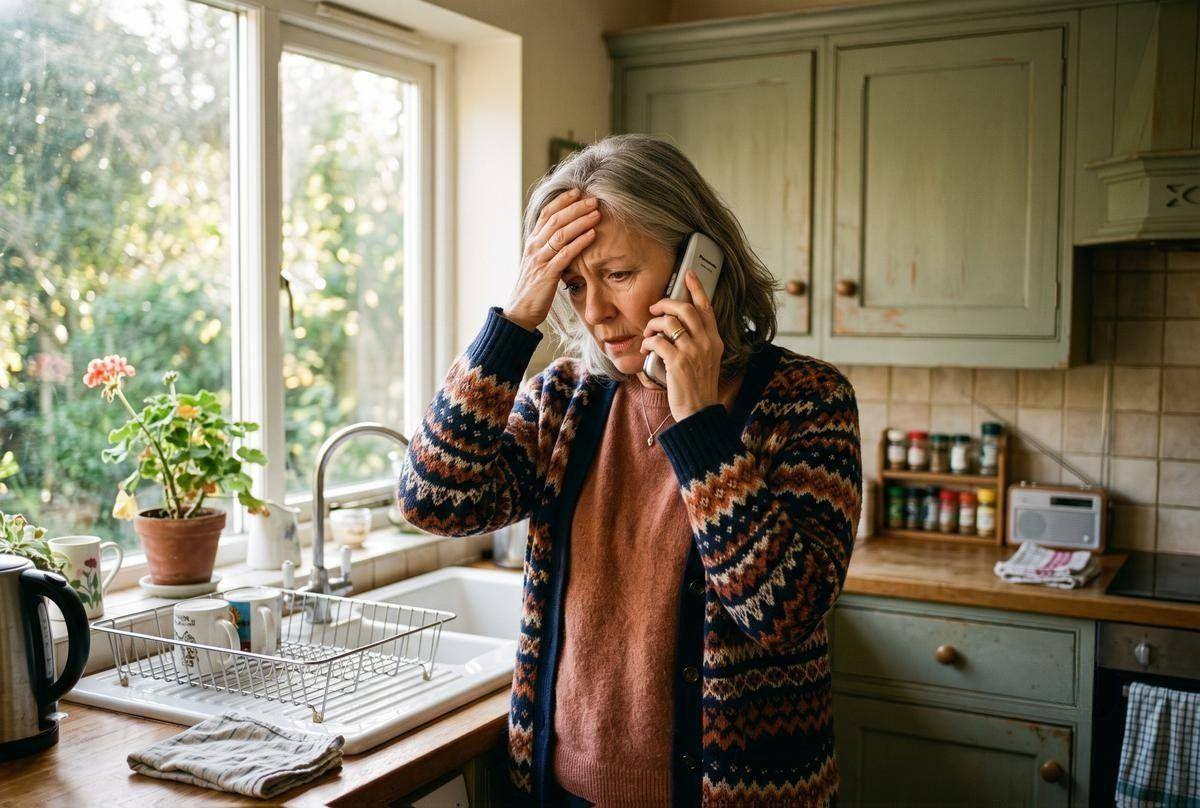
In my years of sitting with older women in particular, I have learned that the most common reason for chronic mild dehydration is not biology. It is choice. They restrict fluids on purpose. They stop drinking after lunch because they do not want to get up at night. They skip the morning glass of water because they have an errand and the bathrooms downtown are unreliable. They cut their tea in half because of urge incontinence, which they have not mentioned to anyone, including their doctor.
This is not vanity. It is a rational response to a real problem. Urinary urgency, frequency, and incontinence are common after sixty-five, and the women I know would rather feel thirsty than feel ashamed. But the trade is not even. The body that stays dry to avoid the bathroom is also the body that falls when she stands up too fast, the body whose urine sits in the bladder long enough to grow bacteria, the body that gets admitted for confusion that looks like the beginning of dementia. If a reader recognizes herself in that paragraph, the place to start is not with more water. It is with an honest conversation about bladder symptoms, because most of them are treatable, and the relief is enormous.
There are other ways the margin narrows. Diabetes pulls extra water out through the kidneys when blood sugar runs high, which is one reason hydration belongs inside any conversation about diabetes management after sixty-five. Heart failure works the other direction. Fluid restriction is sometimes medically necessary, and the rules are different. Chronic kidney disease complicates the picture further. None of these conditions removes the need to think about water. They change the math.
What Dehydration Actually Looks Like — and What It Hides Behind
The textbook picture of dehydration is dry mouth, dark urine, and thirst. In an older adult, the first sign is more often confusion. A patient who was fine yesterday is suddenly disoriented today. The family panics, the doctor orders a workup for stroke or infection, and somewhere in the basic metabolic panel the truth shows up: sodium high, BUN-to-creatinine ratio elevated, kidneys straining. The patient was dry. After fluids, the confusion clears.
This matters because the confusion gets misread constantly. It gets called sundowning. It gets called early dementia. In a nursing home it gets called agitation and treated with sedation, which makes the dehydration worse. I have watched families absorb a diagnosis that turned out to be a fluid deficit. I do not say this to alarm anyone. I say it because confusion in an older adult deserves a glass of water and a chemistry panel before it gets a label.
The other tells are quieter. Constipation that does not respond to the usual remedies. Urinary tract infections that keep recurring because concentrated urine is a hospitable environment for bacteria. Dizziness on standing, which clinicians call orthostatic hypotension, is a leading cause of falls in people over seventy-five. A resting heart rate that creeps up because the heart is compensating for a smaller blood volume. None of these symptoms announces itself as a hydration problem. All of them can be.
The skin-pinch test that gets taught in first aid classes is unreliable in older adults because aging skin loses elasticity on its own. A better, free, daily indicator is urine color. Pale straw is fine. The color of weak lemonade is fine. Anything that looks like apple juice or darker means the body is conserving, and the person has been behind for a while. (B-complex vitamins and certain medications can darken urine independently, so the rule is not absolute. But for most people, most days, the color is honest.)
How Much Water Is Enough, Really
The most repeated piece of hydration advice in American life, the rule of eight eight-ounce glasses a day, has no good evidence behind it. Heinz Valtin, a kidney physiologist at Dartmouth, went looking for the original studies in 2002 and could not find them. His paper in the American Journal of Physiology concluded that the rule was a folk number that had escaped into clinical practice and never been validated. Drinking that much does no harm in healthy people, but the rigorous foundation is not there.
The National Academies of Medicine took a different approach in 2004. Rather than prescribe a number, they reviewed actual intake data from healthy adults and reported what people consume on average: about 3.7 liters of total water daily for men and 2.7 liters for women. That total includes water from food, which provides roughly twenty percent of intake: soup, fruit, vegetables, yogurt, oatmeal, even bread. The Academies were careful to call these adequate intakes, not requirements. Most healthy adults regulate fluid balance on their own as long as they listen to thirst and have access to water.
For an older adult, the number matters less than the margin. The body needs roughly the same amount of water it always did. What changes is the reliability of the signals that get her to drink it. The practical question is not how many ounces. It is whether she finishes her morning glass, whether there is something in her hand most hours of the day, and whether the urine in the toilet is pale.
What Counts as Water
Plain water counts. Tea counts. Coffee counts. The widespread belief that caffeinated drinks dehydrate you was overstated for years. The diuretic effect of moderate caffeine is real but small, and the net effect of a cup of coffee or tea on hydration is positive. The St Andrews beverage hydration study published by Maughan and colleagues in 2016 actually found that milk hydrates more effectively than plain water over a four-hour window, because the protein, fat, and electrolytes slow gastric emptying and keep the fluid in circulation longer. Skim milk and oral rehydration solutions topped their index. Sports drinks did about the same as water.
Oral rehydration solutions (Pedialyte, DripDrop, the generic versions) earn their place during actual illness with vomiting, diarrhea, or heat exposure. They are not necessary day-to-day. Sports drinks like Gatorade are formulated for prolonged exertion in young athletes and carry sugar an older adult does not need. The current vogue for high-dose electrolyte powders marketed to healthy adults has no evidence base for sedentary people over sixty-five. Soup is older and better. A bowl of chicken broth at lunch delivers water, sodium, and a little protein, and it has been doing so for several thousand years.
Alcohol is the clear loss. It is a diuretic, the effect is stronger with age because aging kidneys cannot compensate as well, and a glass of wine at dinner that was unremarkable at fifty can leave a seventy-five-year-old measurably dehydrated by morning. None of this means giving up wine. It means drinking a glass of water alongside it.
What Actually Works at Home
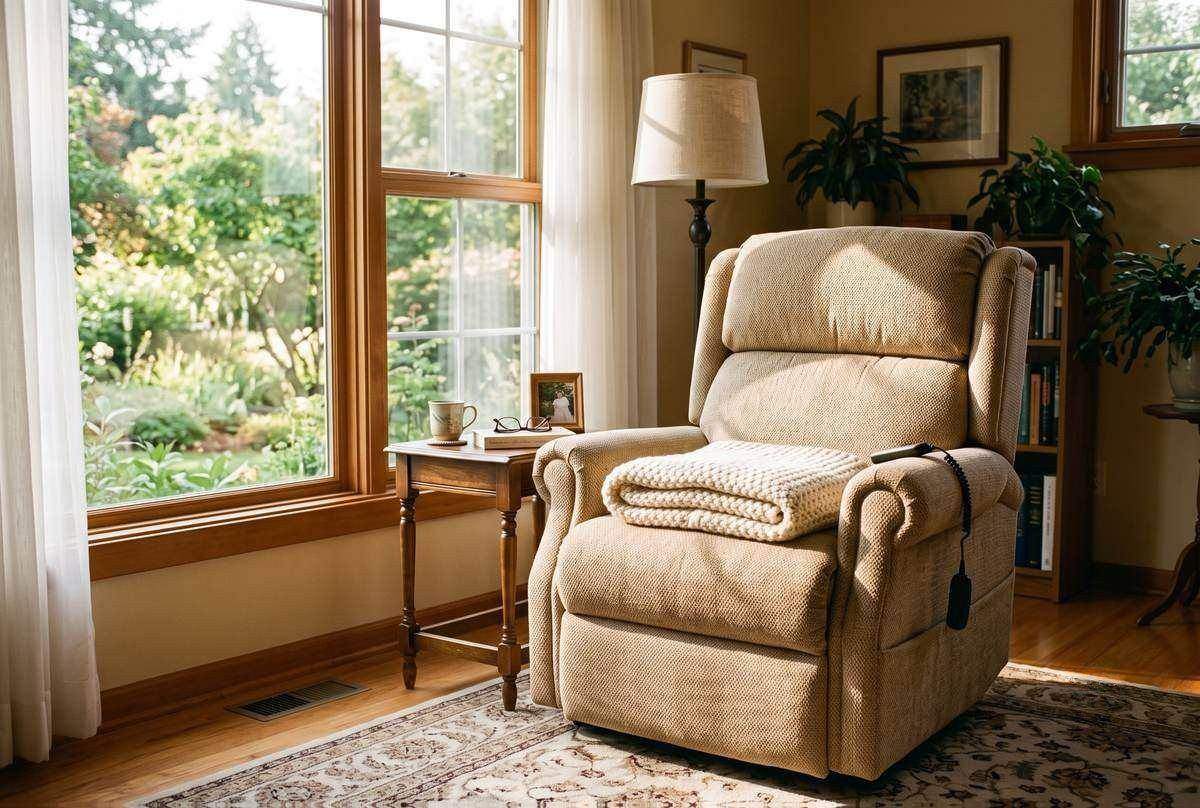
The interventions that move the needle on hydration in older adults are not technological. They are environmental. Nursing-home studies going back to the 1990s have shown that the single most effective change is making fluid visible and within reach. A water glass on the nightstand. A small pitcher on the kitchen counter. A thermos of tea in the chair where she sits to read. People drink what is in front of them. People do not drink what requires a trip to the kitchen and a clean cup.
A morning glass of water before coffee builds a daily floor. Soup at lunch, broth-based rather than cream, covers another two cups while delivering sodium that helps the body hold the fluid. The afternoon tea ritual that many older adults already keep does more work than they realize; the social piece matters too, because hydration is easier when it comes with company. For caregivers, the most useful question is not how much did Mom drink today. It is what color was her urine this morning. That answer is in the bathroom and it is free.
For anyone caring for a person with dementia, the rules shift again. The forgetting includes forgetting to drink. Offering small amounts frequently works better than a large glass that gets refused. A speech therapist's assessment for safe swallowing matters if dysphagia is suspected; thickened liquids are sometimes necessary, and water can be aspirated like anything else. The basic principle holds: visible fluid, offered often, in a familiar cup. People drink what is offered with patience. They refuse what is presented as a task.
A few situations warrant a phone call to the doctor rather than another glass of water. New confusion in someone who was clear yesterday. Vomiting or diarrhea lasting more than a day, especially in someone on a diuretic. Dark urine with very little output. A fast heart rate at rest or dizziness on standing that does not pass. Heat exposure in summer. Recent surgery or hospital discharge, when oral intake has dropped and the body has not caught up. These are the conditions under which mild dehydration becomes the kind that lands a person in the emergency department, and they deserve a fresh set of eyes.
A Note on the Long Game
What I have learned, over forty years of sitting with families, is that the senior who stays out of the hospital is usually not the one with the most expensive interventions. She is the one whose daughter put a glass of water on the bedside table every night, whose home health aide made sure the thermos got refilled, whose own habit of soup at lunch and tea at three was protecting her without her thinking about it. The body keeps quieter accounts after sixty-five, and the people who pay attention to the small numbers — the color in the toilet, the half-empty glass, the bowl of broth — tend to keep the larger numbers from going wrong. None of this is glamorous. None of it shows up in the literature on longevity as the headline finding. But it is, quietly, one of the things that lets a person stay home, stay clear, and stay herself for another season.